
Part One.
From this come two forms of perfectionism: 1. Pathological perfectionism, when a ritual becomes a heap of arbitrary details. 2. Optimised perfectionism, when a ritual is stripped of conventions and only what matters remains.
Here, your attitude towards the world matters. An extravert needs functional objects, whereas an introvert needs objects that evoke feeling.
Based on these preferences, the magician removes everything that merely makes the ritual monstrous and unwieldy. A ritual is like a work of art: it should contain neither too much nor too little, but exactly enough.
It is important to use your psychological type properly in ritual. You cannot make extraverts practise shamanism as introverts do, or make introverts wave a wand as extraverts do. If you are an introvert, however, during trance you must engage your inferior function, which is extraverted: perform a ritual act that anchors the work. With extraverts, the reverse applies: after exhausting work of invocation, enter a trance and finally establish the work on the spiritual plane, since an extravert’s inferior function is introverted.
This is the essence of magic: engaging the inferior function, which is the key to the unconscious. And the unconscious is the gateway to the magical world.
P.S. According to this approach, identifying your psychological type is simple: an introvert ‘sees’ better with open eyes, an extravert with closed eyes.
P.P.S. Esotericism today has, on the one hand, become trivial and, on the other, descended into outright madness. I watched some frankly pirated courses by esoteric teachers and realised that the world has gone mad.
Part Two.
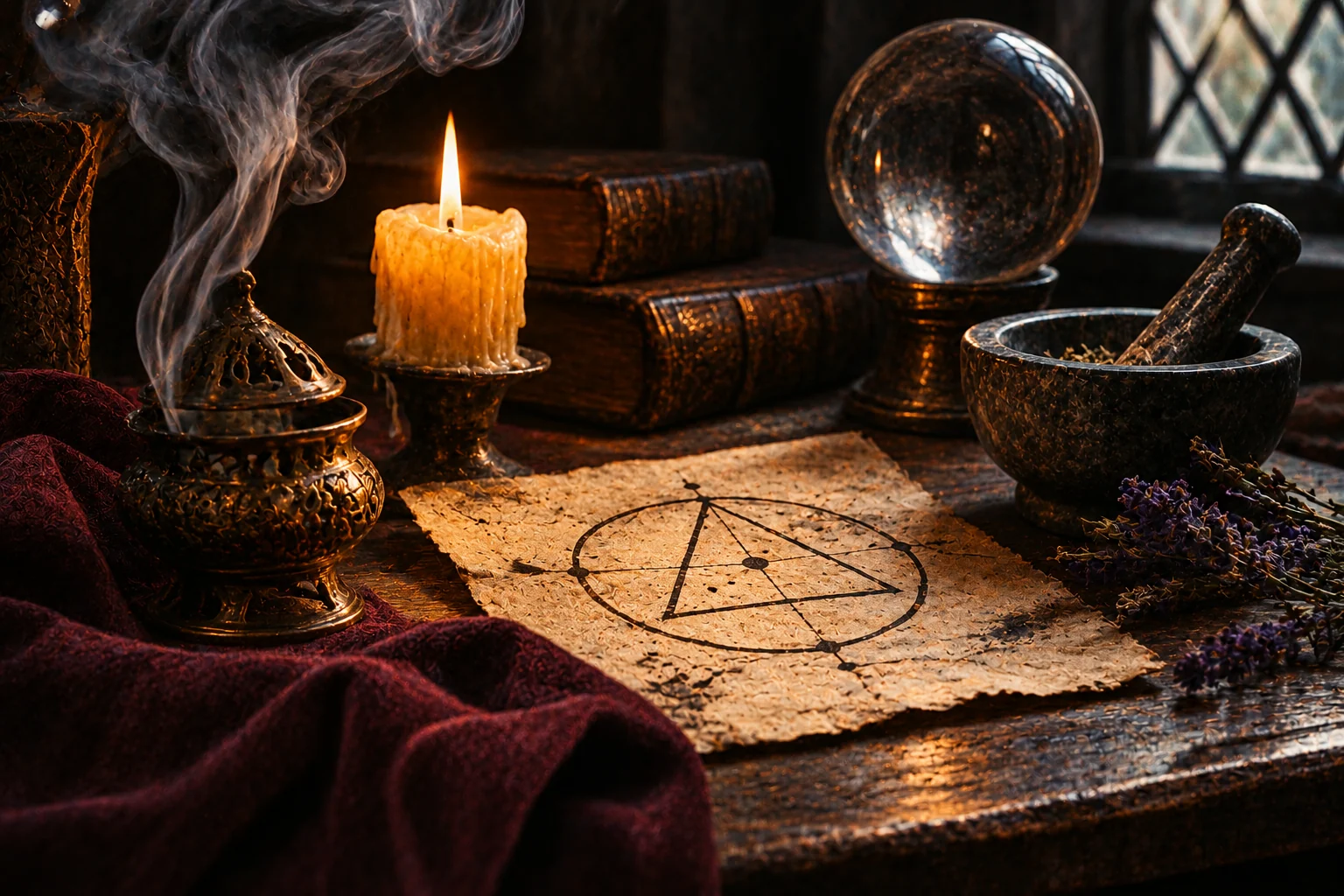
To continue: ritual magic is not a chalice, wand, candles or incense. Ritual magic is awareness of the process. This is precisely why one should not become overly concerned with form: formalism destroys genuine magic. Instead of proceeding with pure will, the magician hides behind their paraphernalia. As I said in the lecture on Kabbalah and Daath, these are your shackles. Do not devote yourself to accumulating things. I understand that this is difficult for many people: they want something they can hold in their hands to ‘support the magic’. But that is the first test of the profane. Only the profane needs scenery; a magician needs only will.
P.S. Ritual objects help one get into the right frame of mind; they are symbols that should assist us on our journey. I rarely use wands, more often a knife. Having something tangible to hold on to can make immersion deeper. But one must be discerning about what to discard. I enjoy dressing in an African shirt or a robe. Yet if I need to work here and now, will the absence of a particular robe or knife really prevent me from doing so?